This is a SEO version of sample pack. Click here to view full version
« Previous Page Table of Contents Next Page »15
House
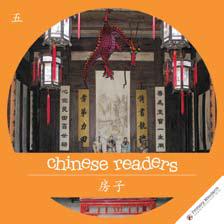
Target characters:
房,廳,室,房子,門,窗戶,客廳,飯廳,廚房,書房,臥室,浴室, 花園
Main grammatical point: House-related nouns
Theme: Places
PYP curriculum link: Where We Are In Place And Time
Subject summary: House and rooms vocabulary
This lesson:
• Introduces house-related vocabulary
• Explores the use of different characters in collocations to form different room names ( 房,廳,室 )
• Uses illustrations of a Chinese house to educate children on the differences between traditional Western and Chinese houses and furniture
This Reader focuses on house-related vocabulary and explores the use of radicals as a way of gaining an understanding of how characters are formed. Doing this will help children to fnd ways to interpret characters and spot connections between words. The Reader also uses illustrations to demonstrate the difference between a traditional Western and Chinese house. Point out the relationship between the illustrations and the characters, for example the structure of the character for ‘window’ is refected in the lattice work of the window in the illustration on page 3.
Learning objectives:
• To understand house-related vocabulary
• To understand the Chinese process of combining characters to form related words
• To appreciate the difference between Western and Chinese decor and house structure
Learning outcomes:
After this lesson, children should be able to: • Understand 10 house-related vocabulary items
• Spot recurring Chinese characters that regularly appear in house-related vocabulary
• Comment on the differences between Western and Chinese decor and house structure
Assessment:
• I understand all the house-related vocabulary in this Reader • I can pick out and pronounce characters that regularly feature in room vocabulary
• I can point out distinctively Chinese features of a house
Differentiation:
To make this lesson more challenging, ask the children about the activities that might be carried out in each of the rooms (for example, eating in the dining room). Point out the reasoning behind the construction of some of the nouns, for example,
飯廳 (the dining room) directly translates as the ‘rice room’ and 廚房 (the kitchen) is the ‘cooks’ room’. Deconstructing these meanings will help children make a stronger connection between the vocabulary used to denote various rooms and the reasoning behind the construction of these nouns.
Related Readers:
House (Orange Book 5) is the frst Reader in the series to introduce place-related vocabulary in a private setting.
Public place-related vocabulary, such as hospital, hotel and shop is explored in Places (Orange Book 10), and From My Window (Orange Book 18).
Countries and borders are explored in Countries (Orange Book 11).
ORANGE LEVEL | BOOK 05
This is a SEO version of sample pack. Click here to view full version
« Previous Page Table of Contents Next Page »